Project Information
BEM COMUM – Innovation and cooperation in the management of baldios to strengthen the bioeconomy, sustainability, and resilience of rural and agro-silvo-pastoral communities

Reference | 17/C05–i03/2022 – PRR-C05-i03-I-000241

Lead entity | Polytechnic Institute of Viana do Castelo

Partners:

  • CIM Alto Minho – Intermunicipal Community of Alto Minho

  • BALADI – National Federation of Baldios

  • CCDR-N – Northern Regional Development Coordination Commission

  • ARDAL – Regional Development Association of Alto Minho

  • CAAVPB – Agricultural Cooperative of Arcos de Valdevez and Ponte da Barca

  • ATLÂNTICA – Forestry Association of the Minho, Coura, Âncora, Vez, and Lima Valleys

  • CERNA – Attractive Cascade Unipessoal Lda.

  • DINAMO 10 – Creative Hub

  • ELOS DA MONTANHA – Rural Development Cooperative, CRL

  • FOLK & WILD Unipessoal Lda.

  • KEEN TOURS Lda.

Approval date | 04/05/2023
Start date | 30/06/2023
End date | 30/09/2025

Investment | €547,996.57

Bem Comum (Common Good)

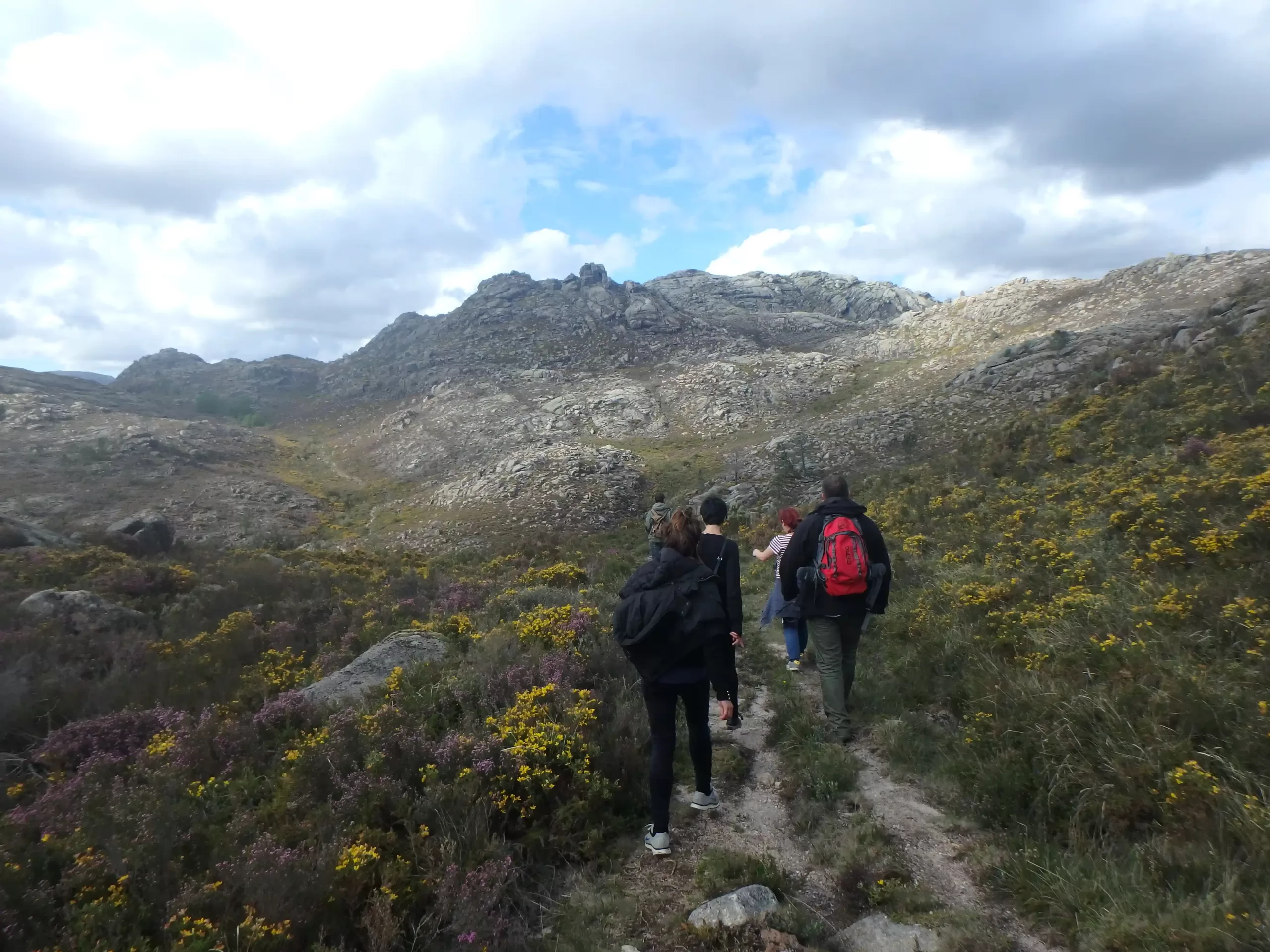
Bem Comum is a project dedicated to local communities whose cultural identity, local economy, and ways of life are intertwined with the community use and management of baldios (common lands). Many of these territories are located at higher altitudes and face the risks of depopulation and economic marginalization, which must be countered by making better use of the opportunities offered by their rich cultural and natural heritage.

The project’s area of intervention is in the northwest of Portugal, focusing on parishes with baldios in the NUTS III regions of Alto Minho, Cávado, Ave, and the parish of Cabril, in the NUTS III Alto Tâmega region.

Baldios are lands—almost always upland or mountainous, though they can also occur in valleys—with a tradition and legal recognition as means of community production, that is, owned and managed by local communities (Law 75/2017 of August 17). Their size varies, tending to be more extensive in mountainous areas, and they hold significant social, economic, and environmental importance due to the multiple resources and services they provide, or have the potential to provide, to local communities and the wider region.

Baldios are the property of local communities. For centuries, their resources contributed to the survival of mountain village populations. In light of the challenges posed by the depopulation of these villages, baldios must now contribute to achieving a higher quality of life and well-being for those who live and work in highland territories.

Good management of baldios is also crucial for the sustainable enhancement of the landscape, forests, water, agriculture, pastoralism, and wildlife; for tourism; and for renewable energy production—multiple benefits on which we all depend for a healthier and safer life.

  • Promote social innovation processes to revitalize rural territories by connecting and coordinating a multidisciplinary and multisectoral network (agriculture, forestry, tourism, creative industries, development associations, local administration, and the R&D system).

  • Create and develop the Minho Baldios Geoportal (NUTS III Alto Minho, Cávado, and Ave) to support decision-making and promote good practices in baldio management and among local communities.

  • Promote co-creation innovation actions in two mountainous territories with baldios (Peneda/Soajo – Arcos de Valdevez and Amarela/Gerês – Terras de Bouro), including:

    a) Characterization and evaluation of baldio management systems and practices by local communities;
    b) Actions to enhance and demonstrate results in ecosystem services generated by baldios and sustained by agro-silvo-pastoral activity;
    c) Co-creation of community-based circular bioeconomy solutions to valorize baldio biomass for soil fertilization and energy production;
    d) Assessment of the social, economic, and environmental impacts of tourism in baldios and promotion of collaborative, fair, and sustainable ecotourism involving businesses and local communities;
    f) Promotion among secondary school students and young adults of educational activities to raise awareness about baldios, mountain activities, and their current and future importance;
    g) Promotion of women’s entrepreneurship through international cooperation with the Ganaderas en Red project;
    h) Study, identification, and promotion of best practices for attracting and locally integrating qualified entrepreneurs and digital nomads.

The project is framed within the Innovation Agenda for Agriculture 2020–2030: Terra Futura, under Flagship Initiative 7: Revitalization of Rural Areas. This initiative aims to promote the attractiveness of rural territories. The project includes the following action lines:

  • 7.2. Knowledge

  • 7.5. Smart Rural Territories

  • 7.6. Economic Diversification

Coordenação

Parceiros
News from the project